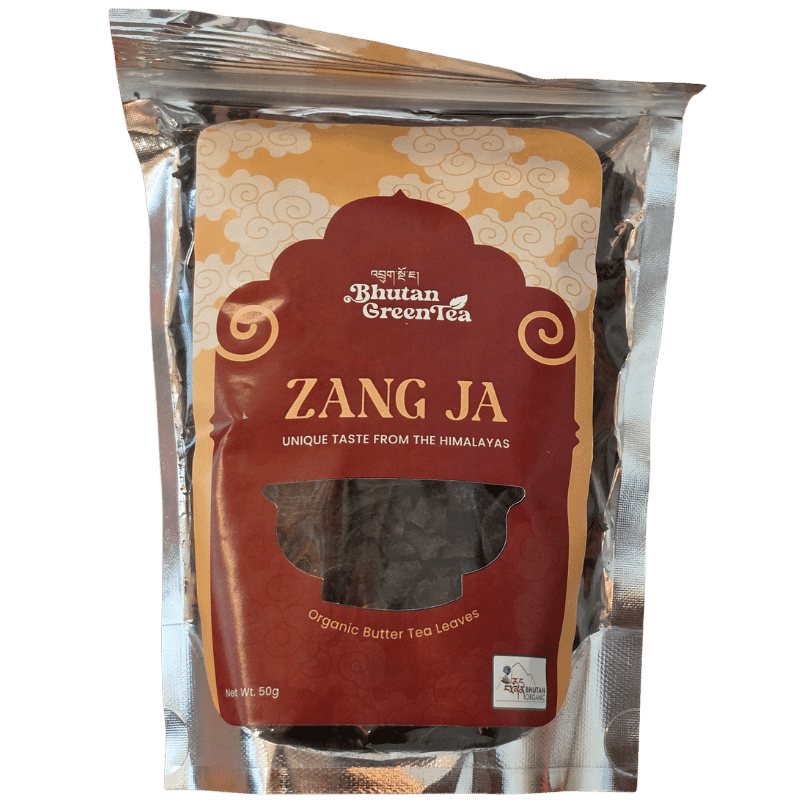
Bhutanese Organic Zang Ja – Butter Tea Leaves (50g)

Traditional organic butter-tea leaves blended with Himalayan Loranthus for brewing authentic Bhutanese Suja at home.

Zang Ja — The Leaves That Become Suja

Zang Ja is not a tea to sip. It is the leaf blend a Bhutanese household boils, strains, and whips with yak butter and salt to create Suja, the butter tea that powers mountain life. Ours is the authentic recipe from Samdrupcholing Zangja Tshongley Detshen in Trongsa: organic green tea leaves blended with Loranthus ferrugineus, the mistletoe that grows wild on Himalayan oaks and lends the brew its distinctive rosy hue and gentle sweetness.

The leaves themselves are tightly rolled, dark green with silvery tips, and carry a grassy, slightly resinous aroma. Once brewed and churned with butter, they produce a deep coral-coloured tea that is rich, salty, foamy, and deeply satisfying on a cold morning or after a long trek. For Bhutanese, Suja is not a beverage but a daily ritual, shared with guests in every home and monastery from Thimphu to Bumthang.

How to enjoy Zang Ja in Bangkok:

  • The Traditional Bhutanese Way (Suja): Boil the leaves, strain, add butter and salt, and churn vigorously until foamy. Serve in a small wooden bowl.
  • The Quick Way: Steep two teaspoons in a cup of hot water for three minutes, then stir in a teaspoon of salted cultured butter and a splash of milk for an instant Suja-style latte.
  • Pairing: Always serve alongside zow (puffed red rice), ema datshi, or any spicy Bhutanese dish. The salt and fat of the tea tame the chillies beautifully.

Distributed by DRUKSELL/CSI MARKET under the Bhutan Green Tea brand, with LOAS, BFDA-GHP/GMP and Bhutan Organic certification. Every packet is a direct connection to the smallholder tea growers of Samdrupcholing.

Net Weight: 50g

Order through Line

History of Bhutanese Organic Zang Ja – Butter Tea Leaves (50g)

Butter tea is older than the Kingdom of Bhutan itself. When Tibetan traders crossed the high Himalayan passes into central Bhutan centuries ago, they brought with them the practice of boiling tea leaves in water, adding rancid yak butter from their saddlebags, and churning the brew in a wooden churn called a chandong. The drink was pure survival food: dense calories, salt to replace what the body lost at altitude, and a warmth that radiated from the stomach outward.

By the time the first kings of Bhutan unified the warring valleys in the 17th century, Suja was already woven into every layer of national life. It was offered to visiting lamas, served to monks at the great dzongs, and consumed by families three or four times a day. The second king, Jigme Wangchuck, encouraged the planting of tea in Samdrupcholing in the 1960s, and the village has produced the country’s most respected Zang Ja ever since.

Today the cooperative at Samdrupcholing grows the green tea leaves and gathers the Loranthus mistletoe from wild oaks on surrounding ridges, blending them in the proportions that have made Trongsa butter tea famous. Every 50g packet you hold is the result of that quiet village tradition.

Nutritional Value of Bhutanese Organic Zang Ja – Butter Tea Leaves (50g)

Nutrient

Range

Calories

-

Protein

-

Fat

Carbohydrates

-

Fiber

-

Sodium

-

Dietary Pros:

  • 100% Organic Leaves — certified by LOAS, BFDA-GHP/GMP and Bhutan Organic
  • Traditional Loranthus Blend — wild-harvested Himalayan mistletoe adds unique plant compounds
  • Hand-Plucked & Hand-Blended — no mechanical processing
  • Vegan Leaf, Dairy-Free Tea — the leaf itself contains no animal products
  • Long Shelf Life — 24 months from manufacture

Nutritional Highlights (per 100g of dry leaf): Catechins 12.71g, polyphenols 4.76%, caffeine 2.48g, ascorbic acid 65.05mg. When prepared as Suja with butter, the brew becomes a calorie-dense, electrolyte-rich drink ideal for cold mornings or high-altitude travel.

Health & Lifestyle Benefits:

  • Sustained Energy: The combination of caffeine, fats, and salt delivers steady, long-lasting fuel without the spike-and-crash of coffee.
  • Hydration at Altitude: Salt and butter help the body retain fluids in dry, cold conditions.
  • Rich in Polyphenols: The catechins and polyphenols in green tea leaves support cardiovascular and cellular health.
  • Supports Digestion: Served after heavy meals, Suja is believed to aid digestion and warm the stomach.
  • Honours a Mountain Heritage: Every purchase supports the tea growers and Loranthus foragers of Samdrupcholing village in Trongsa.

How to make Bhutanese Organic Zang Ja – Butter Tea Leaves (50g)?

Zang Ja is brewed differently from ordinary tea. It is boiled hard, not steeped. Use two tablespoons of leaves per three cups of water.

  1. Boil: Combine 3 cups of water and 2 tablespoons of Zang Ja leaves in a saucepan. Add ¼ teaspoon of salt. Bring to a rolling boil and simmer for 10 to 15 minutes.
  2. Strain: Pour through a fine sieve into a jug. Press the leaves to extract every drop of flavour, then discard them.
  3. Add Butter: Pour the hot tea into a blender or traditional chandong. Add ¼ cup of melted unsalted butter (yak butter if you can find it; high-quality cultured butter works beautifully too).
  4. Churn: Blend on high for 30 to 60 seconds until the tea is frothy and pale coral in colour. Pour into small cups or wooden bowls and serve hot.

Tip: In Bhutanese homes Suja is always made fresh and served immediately. Reheating kills the foam. If you don’t have a blender, pour the hot tea and melted butter back and forth between two jugs from a height until frothy.

Secret Link