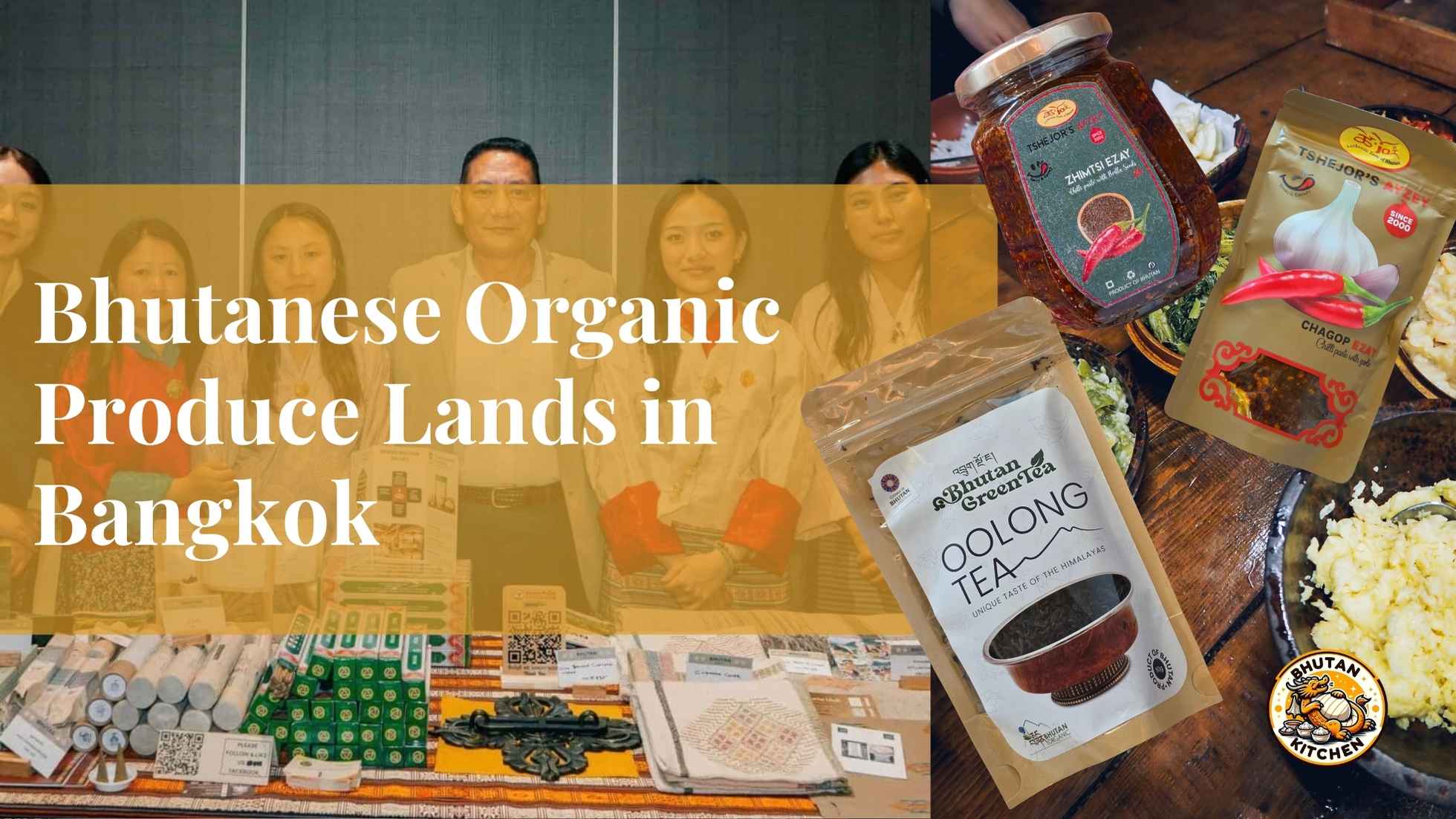
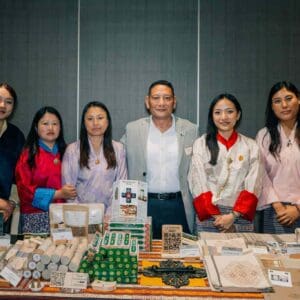
In late May 2026, something quietly unprecedented happened in Bangkok’s high-end Nanglinchee district in Sathorn. Inside Villa Market, the founder himself, Mr. Surapong Poosanakhom, stood beside the Deputy Chief of Mission of the Royal Bhutanese Embassy and watched Thai shoppers taste, smell, and buy Bhutanese food that, until that week, almost no one in Thailand had ever held in their hands.
It was the first-ever Brand Bhutan pop-up in Thailand. It was temporary. The products it left behind are not.
This is what it was, what it means, and how to get Bhutanese organic produce in Bangkok today.
The numbers behind “Brand Bhutan”
Bhutan’s agricultural export story has shifted from sleepy to strategic.
- 2025 export value: Approximately Nu 3.51 billion (~USD 48 million) in primary and processed agricultural products, with some Ministry reporting figures near Nu 4 billion (USD 55 million).
- 2024–2025 diversification: For the first time, Bhutan shipped meaningful volumes to Nepal, the United States, Australia, Vietnam, Thailand, and Singapore – markets beyond the traditional India–Bangladesh corridor.
- Early 2026 volume: Over 10,000 metric tonnes of agricultural produce exported in just January–April 2026, led by oranges, areca nut, and ginger.
- Targets: The Agrifood Sector Strategy 2034 aims to triple exports to Nu 9 billion (~USD 108 million) by 2034, with a near-term goal of USD 68 million by 2029.
What does “Brand Bhutan” actually mean? It is the official export mark launched in February 2016 by the Department of Trade, Ministry of Industry, Commerce and Employment. It operates as two sub-brands: Made in Bhutan for processed goods and Grown in Bhutan for agricultural produce. The mark is awarded only after product assessment, and it exists to do one job, to tell buyers anywhere in the world, that what they are holding is genuinely, verifiably Bhutanese. For Thai buyers at the Villa Market pop-up, that mark was the trust signal that justified a premium price.
Source: Department of Industry, Royal Government of Bhutan; Ministry of Agriculture and Livestock reporting; Kuensel / Bhutan Broadcasting Service, 2025–2026.
Why Bhutan is arguably the cleanest food source on earth
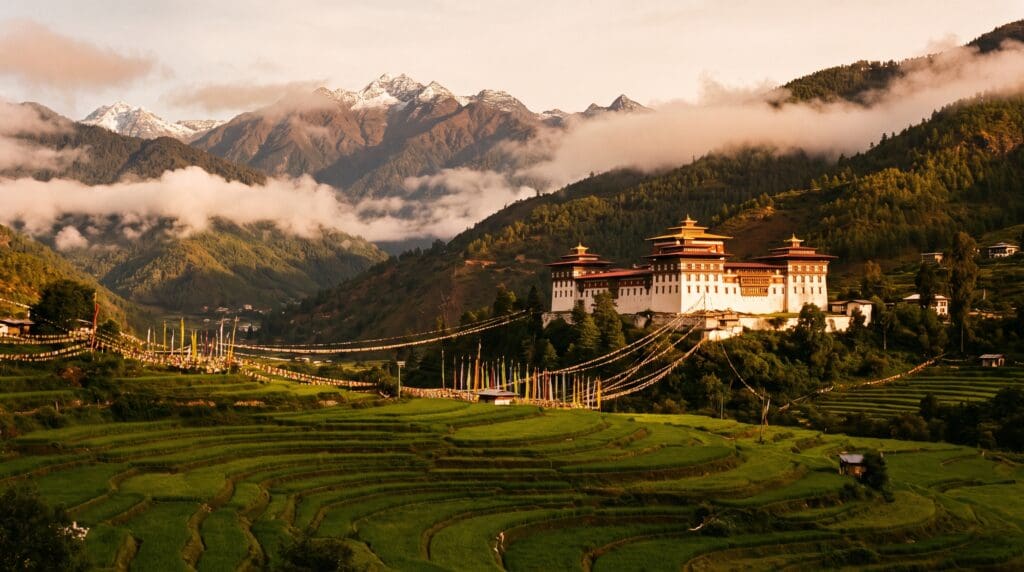
Most countries have to work toward organic. Bhutan started there and has been working to keep it.
Constitutional carbon-negative status. Bhutan is the only country in the world that absorbs more CO₂ than it emits, a status so important that the constitution mandates forest cover stay above 60% (current cover: over 70%). Most of that absorption is forests and hydropower exports, but the agricultural system lives inside the same policy frame, free rural electricity, subsidized biogas, organic-by-default farming in remote districts, and the practical Buddhist restraint on industrial livestock that keeps the foodprint of food low.
The National Organic Programme. Launched in 2011, with a national target of 100% organic farming. The honest 2022 figure: about 5.6% of cultivated land is officially certified organic, but roughly 70% of farming is organic by default – smallholders in steep, remote valleys who never adopted synthetic inputs in the first place, and who can’t easily afford them now. The implication: most Bhutanese food is de facto clean even when it doesn’t wear a label.
Pristine inputs. Irrigation water comes from glacial Himalayan streams. Pest pressure is managed by altitude, polyculture, and traditional rotations rather than chemicals. Livestock, including the famous yak, range on alpine pasture, not factory feedlots.
This is what “Grown in Bhutan” actually means when you read it on a jar of red rice or a packet of dried chilies. Not a marketing line. A land use policy that has been in place for two generations.
What we brought back from the event
Bhutan Kitchen was at the Taste of Bhutan Event in the Landmark Hotel. We didn’t just attend. We purchased the entire remaining stock from every participating producer, Tshejor’s, the CSI Market aggregator, the Bumthang quinoa growers, the Samcholing tea gardens, and the smaller artisans whose names don’t always make it onto a label.
Why? Because for many of these producers, the cost of shipping unsold stock back to Bhutan exceeds the value of the stock itself. A Bangkok pop-up with no buyer-of-last-resort means a loss. We didn’t want that to be the story. So we cleared the floor, brought it home to our Sukhumvit 39 kitchen, and added it to our permanent organic produce line.
The pop-up ran 27–30 May 2026 (with the “Taste of Bhutan” B2B reception at The Landmark Bangkok on 29 May). It was coordinated by the Department of Trade, DAMC, the Royal Bhutanese Embassy in Bangkok, JICA Bhutan, the Bhutan–Thai Chamber of Commerce, Live Twice, and Villa Market. Many of the producers at the pop-up carry the Brand Bhutan mark and Bhutan Seal Award, a quality tier that, until last month, was effectively invisible to Thai consumers.
That pop-up is over. Bhutan Kitchen is not. If you are in Bangkok and want this food, you can have it, through our restaurant in Taka Town (Sukhumvit 39) or via our organic produce options.
What Bhutanese Produce you can actually get delivered in Bangkok right now
Here is a curated slice of what we pulled from the pop-up, what we continue to source, and what is currently in stock on our Bhutanese organic produce page. Everything below is either Brand Bhutan certified or sourced direct from the named producer community.
The chili shelf 🌶️ – the soul of Bhutanese cooking
Bhutan eats more chili per capita than almost any country on earth, and we are not exaggerating. If you want to understand the cuisine, start here.
- Bhutanese Organic Ema Otto (150g) – The foundational chili. Sun-dried red chilies with that intense, smoky-sweet heat that anchors ema datshi.
- Bhutanese Organic Ema Shukam – Rare white chilies. Milder, more aromatic, almost floral. A revelation if you have only ever known red.
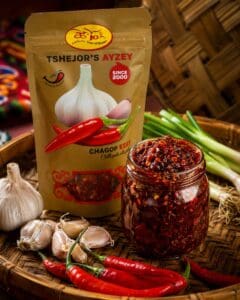
- Tshejor’s Ayzey Chagop Ezay (200g) – Hand-cooked chili paste with whole garlic and ripe tomatoes.
- Bhutanese Organic Kurtoep Ezay (200g) – From Kurtoed Gewog. Fire-roasted organic chilies, deeply traditional.
- Bhutanese Organic Zimtsi Ezay (200g) – Award-winning chili paste with perilla seeds. Nutty, crunchy, the chef’s choice.
- Tshejor’s Ayzey Zoedoe Ezay (200g) – The classic: chili paste enriched with fermented yak cheese. The closest a single jar gets to the national dish.
- Tshejor’s Ayzey Zhimtsi Ezay (200g) – Perilla seeds and Sichuan pepper. Numbing crunch.
- Bhutanese Organic Soya Bean Ezay (200g) – Made with keeneyma (fermented black soybeans). Deep umami.
- Bhutanese Organic Dried Fish Ezay (200g) – Briny, ocean-meets-mountain umami. Not for the faint-hearted.
- Bhutanese Organic Sichuan Chilli Crisp (150g) – A Bhutanese take on the cult Asian condiment. Put it on eggs.
The grains, seeds & staples
- Bhutanese Organic Red Rice (1kg) — Cultivated for millennia in the high-altitude terraced paddies of Paro, Punakha, and Wangdue Phodrang. Gluten-free, high in fiber and antioxidants, slightly chewy, faintly nutty. Bhutanese red rice is on the Slow Food Ark of Taste for good reason.
- Bhutanese Organic Quinoa (1kg) — Certified organic white quinoa from Bumthang. A complete plant protein, and a story of how Bhutan reclaimed fallow high-altitude land for a crop that thrives where rice cannot.
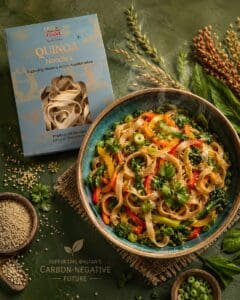
- Bhutanese Organic Quinoa Noodles (100g, FINN Food) — Noodles made with Bhutanese quinoa flour. Modern packaging, ancient grain.
- Bhutanese Organic Millet Noodles (100g, FINN Food) — Himalayan millet, same maker. A gluten-free noodle that holds a stir-fry.
- Bhutanese Organic Zaw (700g) — Traditional puffed heirloom rice. Light, airy, gluten-free. The Bhutanese popcorn.
Dairy from the high pastures
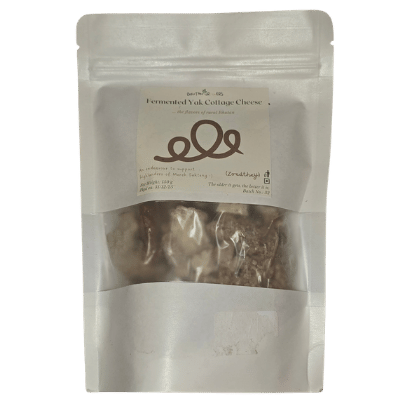
- Zoethey — Fermented Yak Cottage Cheese (200g) — Artisanal, from the Brokpa people of Merak. This is yak cheese the way it has been made for centuries, and it is the backbone of the national dish.
- Bhutanese Organic Zoethey Ezay (200g) — The paste version. Pungent fermented yak cheese blended with fire-roasted chilies. Two ingredients, infinite applications.
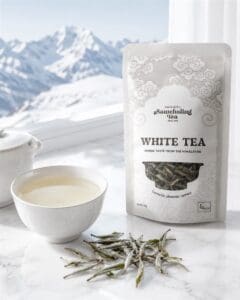
Teas from Samcholing and Samdrupcholing
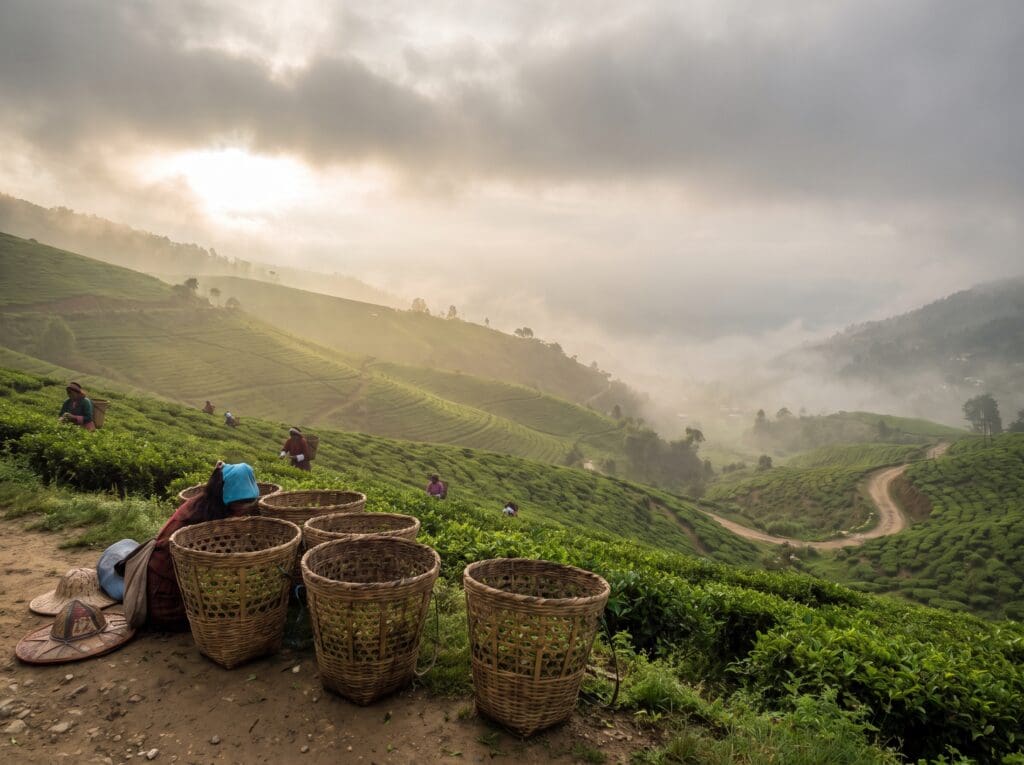
The misted hills of central Bhutan produce some of the cleanest teas in Asia. The same microclimates that make dairy exceptional make tea delicate.
- Bhutanese Organic White Tea (50g) – Hand-plucked at dawn in the Samcholing hills. The most delicate of the line.
- Bhutanese Organic Yellow Tea (50g) – Rare, gently yellowed through a traditional slow oxidation.
- Bhutanese Organic Golden Tea (50g) – Hand-rolled golden buds. The luxury tier.
- Bhutanese Organic Green Tea (50g) – Steamed green tea from Samdrupcholing village in Trongsa.
- Bhutanese Organic Oolong Tea (50g) – Semi-oxidised, with roasted, floral notes.
- Bhutanese Black Tea (50g) – Full-bodied, from the same Samdrupcholing gardens.
- Bhutanese Organic Masala Tea (50g) – Black tea with traditional Himalayan spices. The chai base.
- Bhutanese Organic Zang Ja – Butter Tea Leaves (50g) – Blended with Himalayan loranthus. Brew with yak butter and salt for the real thing.
- Bhutanese Organic Mixed Tea Minkai (100g) – Tisane of dried fruits, flowers, and herbs.
- Organic Himalayan Ginseng Tea (200g) – Ginseng, cinnamon, peppermint. A daily reviver.
Oils, butters & spreads – cold-pressed, single-origin
- Bhutanese Organic Perilla (Zimtsi) Oil (500ml) – Exceptionally high in Omega-3 (ALA). The Himalayan flaxseed oil equivalent.
- Bhutanese Organic Hazelnut Oil (500ml) – Cold-pressed, rich in Omega-9 and Vitamin E.
- Bhutanese Organic Groundnut Oil (500ml) – From Khamdhang. The everyday cooking oil of the Bhutanese kitchen.
- Bhutanese Organic Peanut Spread – Pure roasted peanut butter from Zobel Gewog. No added sugar.
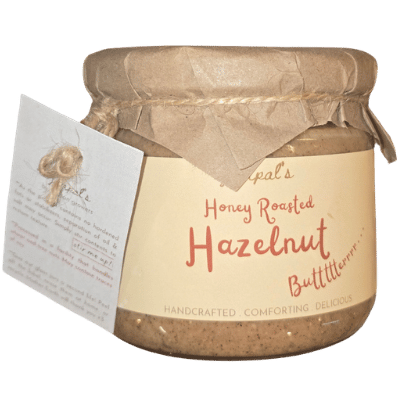
- Bhutanese Honey Roasted Hazelnut Butter – Silky, with local wildflower honey.
- Bhutanese Organic Crunchy Chocolate – Hazelnut Spread – Himalayan hazelnuts + premium cocoa.
Dried, fermented & foraged
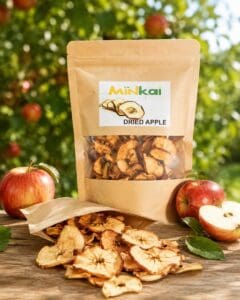
- Bhutanese Organic Dried Apple Minkai (100g) – Sun-dried rings from the Phobjikha valley. Naturally sweet.
- Bhutanese Organic Dried Turnip (120g) – Lom. Earthy, umami, the workhorse of the Bhutanese pantry.
- Bhutanese Organic Vasaka Flowers (50g) – Traditional respiratory support. Brew as tea.
- Bhutanese Organic Ginger Powder – Sun-dried and finely ground. The base of every Bhutanese kitchen.
- Bhutanese Organic Tengma Fry (300g) – Traditional spicy crispy beaten-corn snack. Gluten-free.
A few things you may not know about Bhutanese food
A handful of facts that make this produce worth a second look:
- Red rice is naturally pigmented. The reddish-brown hue comes from the bran layer, which is left intact. That is also where most of the fiber and antioxidants live – so the colour is the nutrition, not a cosmetic.
- Bhutanese chilies are small and vicious. A single ema datse (red chili) can out-spice a Thai bird’s eye by a factor of two or more. The national dish, ema datshi (chili + cheese), is not a hot dish by Bhutanese standards. It is the dish.
- Cardamom is Bhutan’s quietest export superstar. Bhutan is one of the world’s largest producers of large cardamom (Amomum subulatum), a smoky, almost mentholated variety distinct from the green cardamom you know. It grows on steep forested slopes in the south at 900–2,000 m elevation, and it is essentially organic by default – no synthetic inputs needed.
- The yak has religious significance. Most Bhutanese Buddhists do not slaughter yaks. Yak products like cheese, butter, dried meat, come from animals that died of natural causes, were offered in ritual, or live out long working lives. This is one reason yak cheese is rare and expensive.
- Buckwheat is making a comeback. Once a “poor man’s crop,” it is now being actively re-promoted in Bumthang, both for its nutrition (gluten-free, complete protein) and for the fact that it grows where rice cannot. Watch for it in noodles and pancakes.
- Quinoa was introduced in the 1980s and thrived. Bumthang’s high-altitude, cold conditions turned out to be ideal. It is now one of Bhutan’s premium export crops.
How to get Bhutanese organic produce in Bangkok
Three doors, in order of immediacy:
1. Walk in. Bhutan Kitchen is in Taka Town, Sukhumvit Soi 39 (also referenced as Phetchaburi 38/1), Khlong Tan Nuea, Watthana, Bangkok 10110. Eat the food. Buy a jar of ezay. Take it home.
2. Order online. The full list is on bhutan-kitchen.com/our-organic-produce – Reach out and we will check stock and send. We also list some produce on Grab Food
3. B2B and wholesale. Bangkok restaurants, hotels, and specialty retailers who want to carry the produce, drop us a line. We deliver within Bangkok and can discuss broader supply for the F&B industry.
For Thai and international buyers looking to source direct from Bhutan, the official entry point is the Department of Trade, Ministry of Industry, Commerce and Employment in Thimphu – the Brand Bhutan Secretariat. They handle Made in Bhutan and Grown in Bhutan applications and verifications.
The bottom line
Bhutan’s agricultural export story is small in absolute terms with under USD 50 million a year, from a country of under 800,000 people, but it is exceptionally high in signal. The food is genuinely organic. The producers are genuinely small. The land-use policy is genuinely enforced. The Brand Bhutan mark is genuinely earned.
If the pop-up at Villa Market Nanglinchee was a window. Bhutan Kitchen is the door.
If you want this food, It’s on our shelves, on our menu, and on our Bhutanese produce page – every week of the year.